Why the Lower Danube Offers a Different Kind of River Cruise
A different side of the Danube
Many people choose the Danube for their first river cruise, and I did exactly the same. I’m pleased I started there, as it gave me a great introduction to river cruising before discovering some of Europe’s less familiar waterways.
The Danube begins in Germany’s Black Forest and travels east until it reaches the Black Sea. Geographically, it is divided into upper, middle and lower basins, but river cruise itineraries often use Budapest as a practical dividing point between the familiar Upper Danube routes and cruises continuing east through the Balkans.
Classic Upper Danube cruises usually travel through Germany, Austria, Slovakia and Hungary, often including cities such as Vienna, Bratislava and Budapest.
Beyond Budapest, the river continues through countries including Croatia, Serbia, Bulgaria and Romania. This is the part commonly referred to by river cruise operators as the Lower Danube.
What is the difference between the Upper and Lower Danube?
The Upper Danube is the more familiar choice for many river cruisers. Its itineraries often combine grand capital cities with smaller riverside destinations, historic abbeys, vineyards and well-established visitor attractions.
The Lower Danube feels noticeably different. There are fewer famous imperial cities and more regional towns, villages, fortresses and local communities. Belgrade is the major capital city along this section of the river, but much of the experience is about discovering places that may be less familiar to British travellers. It also has a stronger Balkan character, shaped by a complex mix of Roman, Ottoman, Austro-Hungarian and more recent European history. Orthodox churches, medieval fortresses and reminders of the region’s communist past all form part of the journey.
For those who have already experienced the classic Danube route through Austria and Hungary, the Lower Danube offers an opportunity to see a very different side of the river. It feels less predictable, more culturally varied and, in many places, more focused on discovery.
A journey through the Balkans
One of the most interesting aspects of a Lower Danube river cruise is the number of countries and cultures you can experience within a relatively short journey. Many itineraries begin or end in Budapest, giving passengers the chance to spend time in one of Europe’s most recognisable river cities before continuing east into less familiar parts of the continent.
Budapest: the gateway to the Lower Danube
Budapest is often the practical dividing point between classic Upper Danube cruises and the Lower Danube itineraries that continue through the Balkans. Its Parliament Building, Chain Bridge and hilltop Buda Castle create one of the most memorable skylines along the river. For guests travelling east, Budapest provides an impressive starting point before the character of the journey begins to change. Beyond the city, the Danube becomes wider and the destinations gradually feel less influenced by the grand imperial history associated with Austria and Hungary.
Croatia: Vukovar, Osijek and Ilok
Depending on the itinerary, the first country visited after Hungary may be Croatia. Lower Danube cruises commonly include places such as Vukovar, Osijek or Ilok. These are not destinations many British travellers would necessarily think to visit independently, which is part of what makes the journey interesting.
Vukovar has a long and complex history, with much of its more recent story shaped by the Croatian War of Independence. Visits here can be thought-provoking and provide an insight into events that remain within living memory.
Some itineraries also explore Osijek, with its historic old town and riverside setting, or Ilok, which has a winemaking tradition stretching back centuries. These stops introduce a slower and more regional side of Croatia than the better-known resorts along the Adriatic coast.
Serbia: Novi Sad and Belgrade
Serbia is often one of the most memorable parts of a Lower Danube cruise. Selected itineraries visit Novi Sad, a relaxed city overlooked by the imposing Petrovaradin Fortress. Its cafés, attractive central streets and position beside the river give it a very different feel from the larger cities found elsewhere on the Danube.
The Serbian capital, Belgrade, is one of the major city highlights of the journey. It stands where the Sava and Danube rivers meet and has been influenced by many different empires and periods of European history. Belgrade does not have the polished elegance of Vienna or the instantly recognisable architecture of Budapest. Its appeal comes from its energy, complicated history and mixture of architectural styles. A typical visit may include Belgrade Fortress and Kalemegdan Park, which overlook the meeting point of the two rivers. The city also has busy pedestrian streets, Orthodox churches, cafés and lively neighbourhoods that reveal a more contemporary side of Serbia.
This is what makes the Lower Danube so interesting. The destinations are not simply smaller versions of those found farther upstream. They have their own identities, histories and cultures, and each stop adds something different to the journey.
Golubac and the approach to the Iron Gates
After Belgrade, the landscape begins to change as the ship approaches one of the most anticipated parts of the Lower Danube.
Golubac Fortress stands close to the river near the entrance to the Iron Gates. Its towers and walls appear to rise directly beside the water, creating one of the most striking historical sights along this section of the Danube. From here, the river begins to narrow between Serbia and Romania as it enters the gorges of the Iron Gates. It is a part of the journey when it is worth spending time on deck, as the scenery becomes increasingly impressive.
Bulgaria: Vidin and Ruse
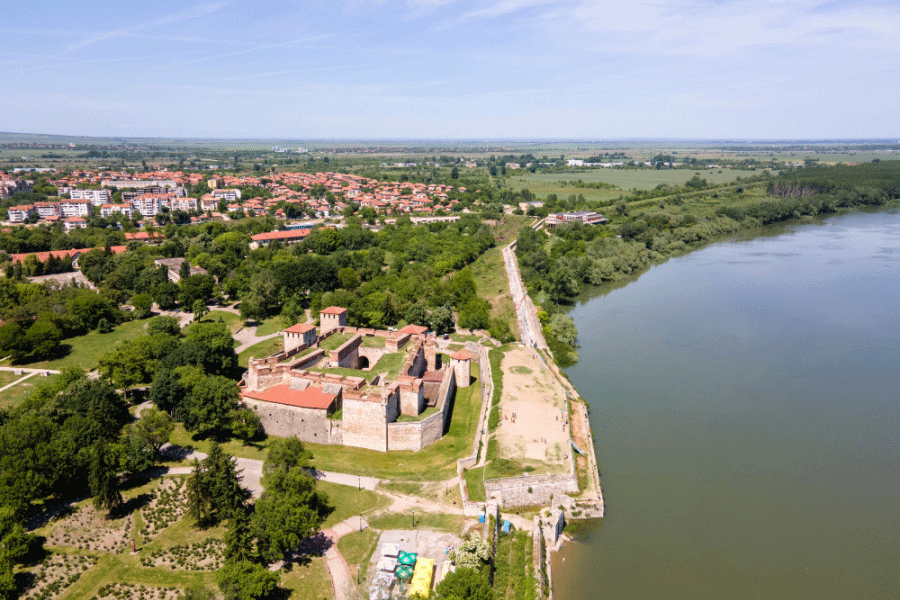
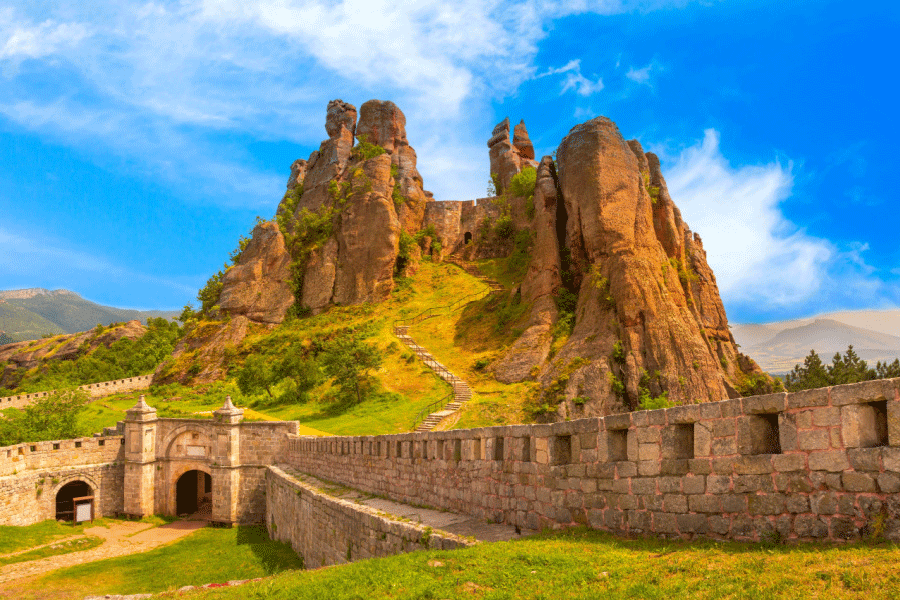
As the cruise continues east, many itineraries include one or more stops in Bulgaria. Vidin is one of the country’s oldest riverside towns and is best known for Baba Vida Fortress, which stands close to the banks of the Danube. Some excursions also travel inland to the unusual rock formations and historic fortress at Belogradchik. Farther along the river, Ruse is another common port of call. The city has elegant architecture and is often used as a starting point for excursions into the Bulgarian countryside.
One of the most popular longer excursions from this area visits Veliko Tarnovo, Bulgaria’s former medieval capital, sometimes combined with the nearby village of Arbanassi. These visits introduce guests to Orthodox churches, traditional houses and a side of Bulgarian history that may be unfamiliar to many travellers.
Romania and Bucharest
Romania usually marks the beginning or end of a Lower Danube itinerary. It is useful to know that Bucharest itself is not situated directly on the Danube. River cruise guests generally embark or disembark at a Romanian river port before travelling by coach between the ship and the capital. Some itineraries include a night in Bucharest, giving guests time to see its wide boulevards, historic buildings and enormous Palace of Parliament. Some cruises can also be extended with a visit to Transylvania.
Bucharest provides an interesting contrast to the smaller towns and rural landscapes experienced during the cruise. It also makes a practical starting or finishing point, with international flight connections and opportunities to extend the holiday.
The order of these destinations varies between cruise lines, and not every itinerary visits each one. However, a typical Lower Danube cruise combines several countries within one journey, with each stop revealing a different part of the Balkans. Current programmes from major operators commonly travel through Hungary, Croatia, Serbia, Bulgaria and Romania.
Sailing through the Iron Gates
For many guests, sailing through the Iron Gates is one of the most memorable parts of a Lower Danube river cruise. Despite the name, the Iron Gates are not a single narrow opening in the river. They form a series of gorges where the Danube passes between Serbia and Romania. The Serbian side forms part of Đerdap National Park, while the Romanian bank is protected within Iron Gates Natural Park. As the ship approaches, the character of the river begins to change. The broad stretches of the Danube gradually give way to steeper hills and high rock faces, with the river narrowing as it winds between the two countries. This is a part of the cruise when it is worth finding a good position in the lounge or spending time outside on deck. The scenery develops gradually, so it is not simply one landmark to look out for. The pleasure comes from watching the landscape change as the ship moves deeper into the gorge.
Golubac Fortress and the entrance to the gorge
One of the first major landmarks is Golubac Fortress, which stands on the Serbian bank close to the entrance of the gorge. The medieval fortress dates from the 14th century and changed hands several times during its long history. Its towers rise beside the water, making it one of the most striking sights along the Lower Danube and an impressive introduction to the Iron Gates. Some itineraries include a visit to the fortress, while others provide views from the ship as it continues along the river. The exact experience will depend on the cruise line and itinerary.
History along the river
The Iron Gates are known for their scenery, but this stretch of the Danube also has a remarkable history. The area includes Lepenski Vir, an important archaeological site containing evidence of settlements dating back thousands of years. Roman Emperor Trajan also ordered the construction of roads, fortifications and a bridge in this region during his campaigns against the Dacians.
One of the surviving reminders of this period is the Tabula Traiana, a Roman inscription carved into the rock beside the river. It was moved to a higher position when water levels rose following the construction of the Iron Gates hydroelectric scheme.
Depending on the route and sailing conditions, guests may also see the enormous carved face of Decebalus on the Romanian side of the river. Decebalus was the last king of Dacia and a prominent figure in the history of the region.
What is a Lower Danube cruise really like?
A Lower Danube cruise feels noticeably different from the classic Danube itineraries through Germany, Austria and Hungary. The Upper Danube is often associated with grand architecture, well-known capital cities and attractive riverside towns. On the Lower Danube, the emphasis shifts towards Balkan history, regional culture and destinations that many British travellers may know relatively little about.
The scenery also varies considerably throughout the journey. There are wide, open stretches of river, rural landscapes and working ports, as well as the much more scenic passage through the Iron Gates. Not every part of the Lower Danube offers uninterrupted picture-postcard views, but the changing landscape is an important part of understanding the region.
The Lower Danube is also a particularly interesting choice for travellers who enjoy learning about history. The countries along this route have been shaped by Roman, Ottoman, Austro-Hungarian and communist influences, as well as more recent conflicts and political change. Local guides can therefore play an especially important role. The buildings and landmarks may not always be as instantly recognisable as those in Vienna or Budapest, but hearing the stories behind them helps bring each destination to life.
A varied programme of excursions
Excursions on the Lower Danube can range from walking tours and fortress visits to traditional villages, Orthodox churches, wine tastings and trips farther into the surrounding countryside. Some days may involve longer coach journeys, particularly when visiting places located away from the river. Bucharest, for example, is reached by road from the Danube, while excursions from Ruse may travel inland to destinations such as Veliko Tarnovo and Arbanassi. This is worth considering when comparing cruises. Some guests enjoy a full programme of guided sightseeing, while others may prefer a slower pace with more time to explore independently.
It is always helpful to look beyond the names of the ports and check what the excursions actually involve, including travelling times, walking distances and whether alternative options are available. Our team at The River Cruise Company would be happy to help guide you through this.
A greater sense of discovery
One of the main appeals of the Lower Danube is the feeling that you are visiting somewhere less familiar. Places such as Vukovar, Novi Sad, Vidin and Ruse may not be at the top of everyone’s European travel list, but that is part of what makes them interesting. River cruising makes these destinations easy to reach, without needing to arrange separate hotels, transport and border crossings.
Within one journey, you can experience several countries, languages, architectural styles and local traditions. The changes between destinations can feel more pronounced than on some other European rivers, particularly as the cruise moves between Central and Eastern Europe. The Lower Danube may feel less polished than the classic route between Germany and Budapest, but it often provides a stronger sense of discovery. Its appeal lies not only in individual landmarks, but in learning more about a part of Europe that has a complex and fascinating story.
Who would enjoy a Lower Danube cruise?
The Lower Danube is likely to appeal most to travellers who enjoy history, culture and discovering places that feel less familiar.
It can be a particularly good choice for:
• Guests who have already cruised the Upper Danube and want to see a different side of the river
• Travellers interested in the history and cultures of the Balkans
• Those who enjoy guided excursions and learning from local experts
• Guests who are curious about smaller towns, fortresses and regional traditions
• Travellers who want to visit several countries within one journey
• Anyone drawn to the scenery of the Iron Gates
The Lower Danube may also suit people who prefer destinations with a stronger sense of discovery. Some of the cities and towns may not be as instantly recognisable as Vienna, Budapest or Amsterdam, but that is part of their appeal.
Is the Lower Danube suitable for a first river cruise?
It can be, although it may not be the most obvious first choice for everyone. For many first-time river cruisers, the Upper Danube offers an easier introduction. It combines famous cities, attractive scenery and familiar landmarks, which is one of the reasons I was pleased to choose it for my own first river cruise.
The Lower Danube has a different character. There may be more focus on guided sightseeing, regional history and longer excursions into the surrounding countryside. Some destinations feel less polished and more culturally intensive than those found on the classic Danube route. However, this does not mean it is only suitable for experienced river cruisers. A first-time guest with a strong interest in history, Eastern Europe or the Balkans could find the Lower Danube especially rewarding.
The most important thing is choosing an itinerary that matches your interests. If your priority is grand capital cities and traditional European scenery, the Upper Danube may be the better starting point. If you are more interested in less familiar destinations, complex history and a greater sense of exploration, the Lower Danube could be an excellent first river cruise.
When is the best time to cruise the Lower Danube?
The main Lower Danube river cruise season generally runs from spring through to autumn, with each part of the year offering a slightly different experience.
Spring
Spring can be a lovely time to explore the Lower Danube. Temperatures are usually more comfortable for sightseeing, the countryside begins to turn green and popular attractions may feel quieter than during the height of summer. Earlier departures can also offer good value, although the weather may be more changeable. Packing layers and a lightweight waterproof is sensible.
Summer
Summer brings long daylight hours and warmer temperatures, giving guests plenty of time to enjoy the scenery and explore destinations such as Belgrade, Novi Sad and Vidin. The atmosphere in the cities can feel especially lively, with busy cafés and riverside promenades. However, temperatures in Serbia, Bulgaria and Romania can become quite high, particularly during July and August, so this is worth considering if you prefer cooler sightseeing conditions.
Autumn
September and early October can be one of the most comfortable times to cruise the Lower Danube. The most intense summer heat has usually eased, while the days are often still pleasant for walking tours and excursions. The changing colours around the Iron Gates can add another dimension to the scenery, and the overall pace may feel a little calmer than during the busiest summer period.
Which month should you choose?
There is no single best month for everyone, and prices can vary considerably between seasons, cruise lines and individual departure dates.
May and June can suit guests looking for fresh landscapes and comfortable sightseeing weather, while September is often a good choice for those who prefer slightly cooler temperatures.
July and August can sometimes offer particularly good value for money, but travellers should be prepared for higher temperatures and an increased possibility of low river levels during prolonged periods of hot, dry weather.
River conditions are weather dependent and can vary from one year to the next, so it is best to choose the season that suits both your budget and the temperatures you are most comfortable with.
Popular Lower Danube routes and typical itinerary lengths
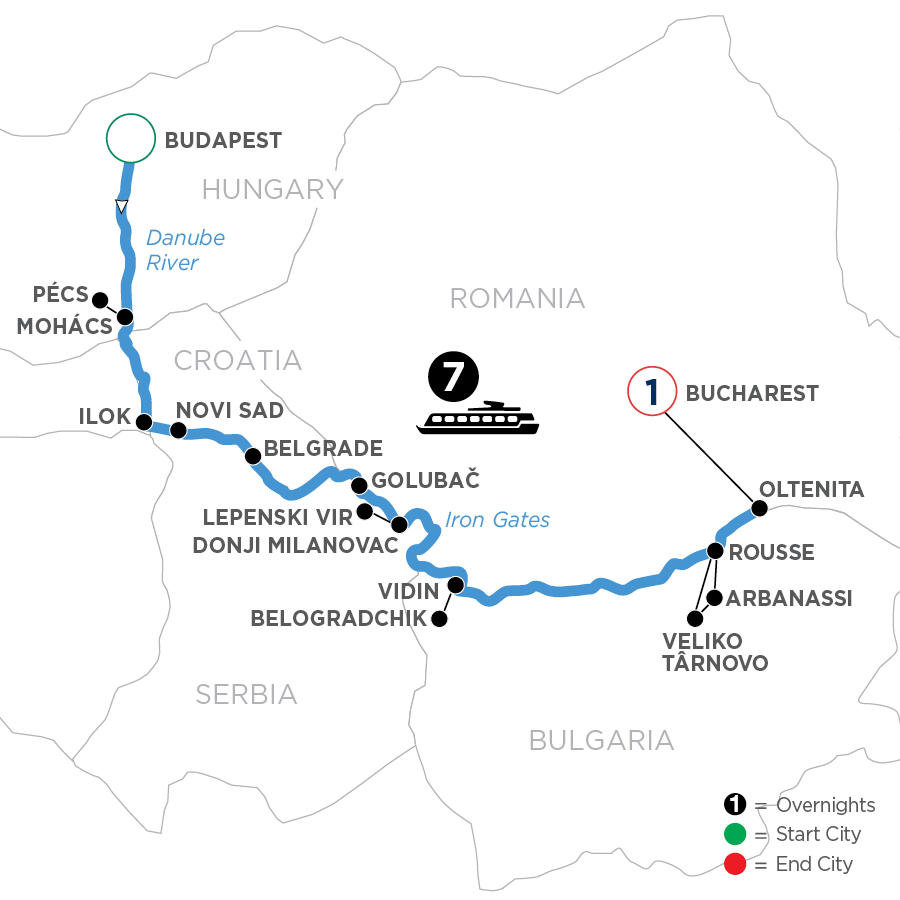
Lower Danube itineraries vary between cruise lines, but the most common route is between Budapest and Romania, or the same journey in reverse. The core river cruise usually travels through Hungary, Croatia, Serbia, Bulgaria and Romania. Typical stops may include Vukovar or Osijek, Belgrade, the Iron Gates, Vidin and Ruse before guests leave the ship and continue to Bucharest by road.
Budapest to Bucharest
A focused Lower Danube cruise commonly includes around seven nights onboard. Depending on the operator, the ship may finish at a Romanian port such as Oltenița or Giurgiu, followed by a coach transfer to Bucharest. Once transfers and a hotel stay in Bucharest are added, the complete itinerary will often last between nine and eleven days. Some itineraries also include extra time in Budapest before the cruise begins. The journey can operate in either direction. There is no significant difference in the destinations covered, although the order of the visits and the timing of the Iron Gates passage will change.
Cruises with Bucharest and Transylvania
Some Lower Danube cruises can be extended with additional nights in Bucharest or a land journey into Transylvania. These longer holidays may include destinations such as Brașov, Peleș Castle and Bran Castle, depending on the programme. An extended cruise-and-stay itinerary will typically last around 11 to 13 days. This can be a good choice for travellers who want to see more of Romania while they are already in the region. However, it is important to remember that the Transylvania portion is a land-based extension rather than part of the river cruise itself.
Budapest to the Black Sea
Longer itineraries may continue beyond the standard Budapest-to-Bucharest route towards the Danube Delta and the Black Sea. These cruises may include Constanța on Romania’s Black Sea coast, along with opportunities to experience the landscapes and wildlife of the Danube Delta. Not every Lower Danube cruise reaches the Delta or Black Sea, so it is important to check the itinerary carefully if this is something you particularly want to experience.
Extended Danube cruises
Some cruise lines combine the Upper and Lower Danube into one longer journey. These itineraries may begin in Germany or Austria before sailing through Hungary and continuing into Croatia, Serbia, Bulgaria and Romania. A full Danube journey can last around two to three weeks, depending on where it begins and whether additional land stays are included. These cruises allow guests to compare the imperial cities and familiar landscapes of the Upper Danube with the more regional character of the Lower Danube within one holiday.
Examples of Lower Danube cruise itineraries
Cruise lines use different names for their Lower Danube programmes, even when the routes cover many of the same countries and destinations.
Current examples include:
• Avalon Waterways’ Balkan Discovery, an eight-day cruise from Budapest to Oltenița, with longer versions adding nights in Bucharest, Budapest or Transylvania
• Viking’s Passage to Eastern Europe, an 11-day journey between Budapest and Bucharest
• AmaWaterways’ Gems of Southeast Europe, a seven-night cruise between Budapest and Giurgiu
• Emerald Cruises’ Enchantment of Eastern Europe, a nine-day journey between Budapest and Bucharest
• Uniworld’s Highlights of Eastern Europe, a 10-day itinerary between Budapest and Bucharest
• Scenic’s Eastern Europe & Balkans Unveiled, a nine-day Budapest-to-Bucharest journey
• Scenic’s longer Lower Danube Discovery, a 16-day itinerary between Budapest and Bucharest
These itinerary names, durations and ports can change between seasons, so they should be viewed as examples rather than a complete list.
When comparing cruises, it is more important to look at the number of nights onboard, the countries and ports visited, the included excursions and whether hotel stays are added before or after the sailing.
Choosing the right length
For most travellers, a seven-night cruise with additional time in Budapest or Bucharest provides a good introduction to the Lower Danube. It covers the main countries and includes the Iron Gates without requiring a particularly long holiday.
Those with more time may prefer an extended itinerary that adds Transylvania, the Danube Delta or the Upper Danube.
When comparing options, check whether the advertised duration refers only to the cruise or to the complete holiday. An itinerary described as 11 days may include seven nights onboard together with hotel stays, transfers and sightseeing before or after the sailing.
Which cruise line should you choose?
Several river cruise operators offer Lower Danube itineraries, but the experience onboard, level of inclusions and style of excursions can vary considerably.
The right choice will depend on your preferred level of service, budget, dining style and how much you would like included in the fare.
Frequently asked questions about Lower Danube river cruises
What countries do you visit on a Lower Danube cruise?
A typical Lower Danube cruise may travel through Hungary, Croatia, Serbia, Bulgaria and Romania. The exact countries and ports will depend on the chosen itinerary.
Is Bucharest on the River Danube?
No. Bucharest is located inland, so guests usually travel by coach between the city and the ship’s Romanian embarkation or disembarkation port.
Do all Lower Danube cruises reach the Black Sea?
No. Many itineraries finish in Romania without continuing to the Danube Delta or Black Sea. These areas are more commonly included on longer cruises.
How long is a Lower Danube river cruise?
The core cruise is often around seven nights. With transfers and hotel stays in Budapest or Bucharest, the complete holiday commonly lasts between nine and eleven days.
Is the Lower Danube suitable for first-time river cruisers?
Yes, particularly for travellers interested in Balkan culture, history and less familiar destinations. Those looking for grand capital cities and a more traditional introduction to river cruising may prefer to begin with the Upper Danube.
Our view
The Lower Danube is an excellent choice for travellers who have already experienced some of Europe’s better-known rivers and are ready to discover somewhere different. It is particularly well suited to guests who have enjoyed cruises on the Rhine, Seine or Upper Danube and now want a route that feels less familiar. The appeal lies in the mix of Balkan cultures, complex history, smaller regional towns and the striking scenery of the Iron Gates. This is not a river cruise centred on a succession of grand imperial cities. Instead, it offers a stronger sense of exploration, with destinations that many travellers may not otherwise think to visit.
For customers who enjoy learning about local history, meeting local guides and seeing a part of Europe that remains less explored, the Lower Danube can be one of the most rewarding river cruise choices.
At The River Cruise Company, we understand that the right itinerary will be different for every traveller. Our team can help you compare routes, cruise lines, cabin options and what is included, as well as explain the differences between a focused Lower Danube sailing and a longer itinerary that also includes Bucharest, Transylvania or the Black Sea.
If you are considering a Lower Danube river cruise, get in touch with our team. We will be happy to talk through the options and help you find the cruise that best suits your interests, budget and preferred pace of travel.