The Moselle River: Vineyards, Wine Towns and Scenic Sailing
A gentler side of European river cruising
The Moselle offers a very different style of river cruise from some of Europe’s larger and better-known waterways. The river rises in France’s Vosges Mountains, flows through Luxembourg and Germany, and eventually joins the Rhine at Koblenz. Along the way, it winds through one of Europe’s best-known wine regions, passing steep vineyard-covered hillsides, historic towns and small riverside communities. That is what gives the Moselle much of its character. This is not a river dominated by major capital cities or long lists of famous landmarks. Much of the enjoyment comes from the journey itself, watching the river curve through the landscape and seeing vineyards rise almost directly from the water.
Many Moselle cruises are combined with the Rhine, giving guests the opportunity to experience two contrasting rivers within one holiday.
How does the Moselle compare with the Rhine?
The Rhine and Moselle are often included within the same itinerary, but the cruising experience on each river feels quite different.
The Rhine is wider and busier, with larger cities, working ports and some very well-known stretches of scenery. The Rhine Gorge, with its hilltop castles and Lorelei Rock, is understandably one of its major highlights.
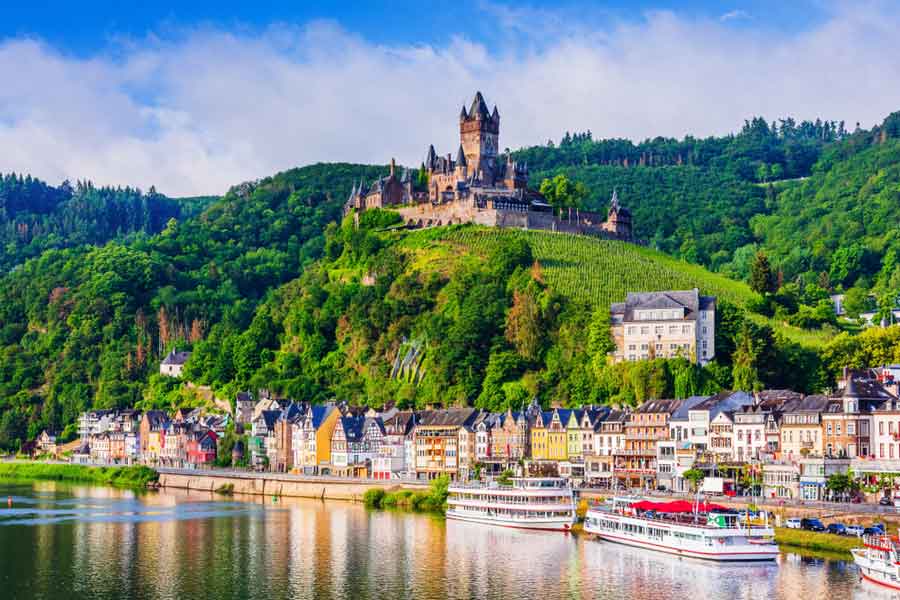
The Moselle feels smaller and gentler. The river twists through tighter bends, the towns are generally more compact, and vineyards cover many of the steep slopes immediately beside the water. There are fewer large cities, so more of the itinerary is centred around places such as Cochem and Bernkastel-Kues, where you can step ashore and explore without needing a full day of sightseeing.
Time spent onboard is also an important part of a Moselle cruise. There are stretches where sitting in the lounge or on the sun deck and simply watching the landscape pass by can be one of the most enjoyable parts of the day.
Rather than saying one river is better than the other, I think they complement each other particularly well. The Rhine feels grander and more varied, while the Moselle offers a quieter and more intimate style of cruising.
Why wine is such a big part of the Moselle
It is almost impossible to cruise the Moselle without noticing the vineyards. They cover many of the steep hillsides beside the river, often rising directly above the towns. In some places the slopes are so steep that you wonder how anyone manages to work on them. The Moselle is particularly associated with Riesling, and wine has shaped the towns and communities along the river for centuries. Even if you are not particularly interested in wine, it is difficult not to appreciate how important it is to the landscape and local way of life. For wine lovers, it adds another dimension to the cruise. Depending on the itinerary, excursions may include vineyard visits, cellar tours or tastings with local producers. There are also plenty of opportunities to try regional wines independently in the towns along the way.
Visiting during the harvest season
Autumn gives the Moselle a slightly different atmosphere as the vineyards begin to change colour and the grape harvest gets underway. September and early October can therefore be particularly appealing for travellers interested in the region’s wine heritage. The changing vineyards bring warmer colours to the hillsides and the connection between the river, its towns and winemaking becomes even more noticeable. You certainly do not need to be a wine expert to enjoy the Moselle. For many guests, simply enjoying a glass of local Riesling while the vineyard-covered hills pass by is enough to appreciate why wine and the river are so closely connected.
A journey along the Moselle
One of the pleasures of a Moselle river cruise is the variety of historic towns and places you can visit along the way. Some are known for wine, others for castles or Roman history, and many are simply enjoyable places to explore at a relaxed pace.
Koblenz: where the Moselle meets the Rhine
Koblenz is where the Moselle joins the Rhine and is often an important point on itineraries combining both rivers. The meeting point is known as the Deutsches Eck, or German Corner, and is one of the city’s best-known landmarks. From here you can clearly see the two rivers coming together before the Rhine continues north.
Koblenz has a larger-city feel than many of the destinations farther along the Moselle, with a historic centre, riverside promenades and Ehrenbreitstein Fortress overlooking the Rhine. For guests travelling from the Rhine onto the Moselle, Koblenz also marks a noticeable change in the journey. Beyond the city, the river narrows, the bends become more pronounced and vineyards increasingly dominate the surrounding hillsides.
Cochem: castles, vineyards and a classic Moselle setting
Cochem is one of the places many people picture when they imagine the Moselle. Set on a sweeping bend in the river and surrounded by vineyards, the town is overlooked by Reichsburg Cochem, the hilltop castle that dominates the skyline. The old town below is compact and easy to explore, with colourful half-timbered houses, cobbled streets, traditional squares and plenty of cafés and wine taverns.
A visit to Reichsburg Castle is included on some river cruise itineraries, while others allow time to explore Cochem independently. Even without visiting the castle, Cochem is an enjoyable place simply to wander. You can walk along the river, explore the smaller streets behind the waterfront or find somewhere to stop for a coffee or glass of local wine. It is a good example of why the Moselle suits a slower style of sightseeing. You do not necessarily need a long list of attractions to fill your time.
Bernkastel-Kues: in the heart of Moselle wine country
Bernkastel-Kues is another of the Moselle’s best-known towns. Historic Bernkastel sits on one side of the river, with Kues opposite. The old town is filled with traditional timber-framed buildings, narrow streets and attractive squares, with vineyards rising behind it. Marktplatz, the central market square, is one of the main areas to explore and is surrounded by colourful historic buildings. The town’s connection with wine is everywhere, with local wine shops, cellars and taverns providing plenty of opportunities to sample regional Riesling. Above the town are the ruins of Landshut Castle, with views across the Moselle Valley for those who want to head up towards the hillside.
Trier: Roman history on the Moselle
Trier brings something completely different to a Moselle itinerary. While many of the smaller towns are associated with vineyards, castles and half-timbered houses, Trier is best known for its Roman history and is widely regarded as Germany’s oldest city. Its most recognisable landmark is the Porta Nigra, an enormous Roman city gate that has survived for almost 2,000 years. The city also contains Roman baths, an amphitheatre and other archaeological remains, alongside Trier Cathedral and a lively historic centre.
This variety is important when looking at a Moselle itinerary. You can spend one day exploring a small wine town and the next discovering some of Germany’s most significant Roman remains.
Is the Moselle more scenic than the Rhine?
This is a question many river cruisers ask, particularly when comparing itineraries that include both rivers. The answer depends on the type of scenery you enjoy:
The Rhine has the dramatic Rhine Gorge, castles, larger cities and a broader mix of landscapes.
The Moselle’s scenery is more intimate and, in many places, more continuous. Vineyard-covered hills, tight river bends and small towns follow one another along the route, with fewer large urban areas interrupting the landscape.
If you enjoy castles, major landmarks and a mixture of cities and countryside, you may prefer the Rhine. If you are drawn to smaller towns, vineyards and a more peaceful style of cruising, the Moselle may appeal even more.
For me, combining the two works particularly well because neither feels like a repeat of the other.
Who would enjoy a Moselle river cruise?
The Moselle is a particularly good choice for travellers who enjoy scenery, smaller towns and a relaxed pace.
It can be especially well suited to:
• Guests who have already cruised the Rhine or Danube and want to experience another European river
• Wine lovers interested in the Moselle’s Riesling-producing region
• Travellers who prefer smaller towns to large cities
• Guests who enjoy spending time onboard and watching the scenery
• Those interested in castles, local history and traditional German towns
• Repeat river cruisers looking for something slightly different
The Moselle can also work very well for first-time river cruisers, particularly when combined with the Rhine.
A Rhine and Moselle itinerary gives you larger cities and well-known landmarks alongside smaller wine towns and scenic sailing, providing a good introduction to two different styles of European river cruising.
When is the best time to cruise the Moselle?
The Moselle river cruise season generally runs from spring through to autumn, with each time of year giving the landscape a slightly different feel.
Spring
Spring is a lovely time to see the Moselle as the countryside begins to turn green and the towns are often quieter than during the height of summer. Temperatures are generally comfortable for sightseeing, although the weather can still be changeable, so layers and a lightweight waterproof are useful.
Summer
Summer brings long days and warmer temperatures, making it popular for riverside cafés, walking through the towns and spending more time outside on deck. The vineyards are lush and green, and local wine events and festivals can add extra atmosphere. July and August can also offer good value on certain departures, although temperatures can be higher and popular destinations may feel busier.
Autumn
For many travellers, September and early October are particularly appealing months to cruise the Moselle. This is harvest season, when the vineyards begin to change colour and grape picking is underway across the valley. It is an excellent time for guests interested in wine, but also for anyone who prefers slightly cooler sightseeing temperatures after the summer months.
Christmas cruises
Selected Rhine and Moselle itineraries also operate during the festive season. Towns such as Cochem and Trier take on a different atmosphere, with Christmas markets, seasonal food, lights and traditional decorations. The vineyards will no longer have their summer colour, so the focus shifts towards festive towns and Christmas traditions.
Which time of year should you choose?
There is no single best time to cruise the Moselle.
Spring can offer quieter towns and fresh scenery, summer brings longer days and lively riverside destinations, while autumn is particularly appealing for the harvest and changing vineyard colours. Prices can vary considerably between departure dates, so it is worth comparing different times of year rather than automatically choosing the busiest months.
Do you cruise just the Moselle or combine it with the Rhine?
Many Moselle river cruises are combined with the Rhine, and the fact that the two rivers meet at Koblenz makes this a natural pairing. A combined itinerary might include part of the Rhine Gorge and larger destinations along the Rhine before turning onto the Moselle for a noticeably quieter section of the journey.
Moselle-focused sailings are also available. If the Moselle is the main reason you are travelling, look carefully at how much time the itinerary actually spends on the river. Two cruises may both reference the Moselle in their names but devote very different amounts of time to exploring it.
Popular Moselle river cruise itineraries
There is a good variety of Moselle itineraries available, from week-long cruises to longer journeys combining the river with the Rhine and other European destinations.
Current examples include:
• Avalon Waterways – Rhine & Moselle: Canals, Vineyards & Castles
• AmaWaterways – Rhine & Moselle Delights
• Viking – Rhine & Moselle Discovery
• Emerald Cruises – Legendary Rhine & Moselle
• Riviera Travel – Gastronomy of the Rhine & Moselle
• TUI River Cruises – The Moselle Valley: Vines & Views
• Scenic – Romantic Rhine & Moselle
Itinerary names, durations and ports can change between seasons, so these should be viewed as examples rather than a complete list. When comparing cruises, look beyond the itinerary name and check the number of nights onboard, where the ship actually sails and what excursions are included. Our team at The River Cruise Company can help you compare the different options.
How long is a Moselle river cruise?
Around seven to ten nights provides a good amount of time to experience the Moselle alongside some of the neighbouring Rhine. Shorter itineraries of around a week are widely available, while cruises of 10 nights or more may add more of the Rhine, additional countries or hotel stays before and after the cruise. Check the number of nights actually spent onboard as well as the total holiday duration when comparing options.
Which cruise line should you choose?
A wide range of river cruise operators sail the Moselle, from relaxed and good-value choices through to more inclusive and luxury cruise lines. The right choice depends on much more than the route. Dining, excursions, drinks packages, cabin styles, service levels and what is included in the fare can all vary considerably.
Frequently asked questions about Moselle river cruises
Can you take a river cruise mainly on the Moselle?
Yes. Although many itineraries combine the Moselle with the Rhine, Moselle-focused cruises are also available. Check how many days and ports on the itinerary are actually located along the Moselle if it is the main reason for your trip.
Where does the Moselle meet the Rhine?
The Moselle joins the Rhine at Koblenz in Germany. The meeting point is known as the Deutsches Eck, or German Corner.
Are Moselle cruises mainly in Germany?
Much of the classic Moselle river cruise experience takes place in Germany, including Trier, Bernkastel-Kues and Cochem. However, the river also flows through France and Luxembourg, and some itineraries include destinations outside Germany.
How long should you allow for a Moselle river cruise?
Around a week provides a good introduction, particularly on a cruise combining the Moselle with the Rhine. Longer itineraries allow more time to explore both rivers and may include additional destinations or hotel stays.
Is the Moselle suitable for first-time river cruisers?
Yes. The Moselle can be a lovely first river cruise for travellers who enjoy scenery, smaller towns, history and a relaxed pace. Combining it with the Rhine gives you two contrasting river experiences within one holiday.
Our view
The Moselle can sometimes be overlooked in favour of the Rhine or Danube, but that is also part of its appeal.
For travellers who enjoy smaller towns, scenic sailing and a slower style of sightseeing, there is a lot to like. The vineyard-covered hillsides, winding river and traditional wine towns give the Moselle a character that feels quite different from Europe’s larger waterways. It is an especially good choice for guests who have already enjoyed the Rhine or Danube and are looking for another European river to discover. However, I would not rule it out for a first river cruise either, particularly when it is combined with the Rhine.
You certainly do not need to be a wine lover to enjoy the Moselle. The wine heritage is important to the region, but the castles, historic towns, Roman history and scenery give the itinerary plenty of variety.
At The River Cruise Company, we work with a wide range of river cruise operators and can help you compare the different Moselle itineraries. Whether you are looking for a shorter Moselle-focused sailing, a Rhine and Moselle combination, a particular cruise line or a certain level of inclusions, our team can help you find the option that best matches your interests, budget and preferred style of travel.
If you are considering a Moselle river cruise, get in touch with The River Cruise Company via /contact-us and we will be happy to talk you through the options.